Browse Journals and Peer-Reviewed Series
Breaking Boundaries
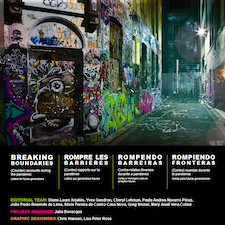
Breaking Boundaries: (Counter) Accounts during the Pandemic - Letters to future generations is a major digital book in four languages (English-French-Portuguese-Spanish). This book is part of a desire to think outside the box of publishing and to bring together contributions from many fields, including academic, artistic, poetic, photographic, etc. The basic idea was to produce accounts, in various forms, related to the ways in which humanity has been confronted with the Covid-19 pandemic. It is a form of "accounting" that will hopefully inform future generations who want to learn more about the effects that the pandemic has had around the globe. The editorial team consisted of eight accounting faculty researchers - from three continents. Through this book, we are pleased, in a sense, to help rethink the boundaries surrounding the publishing world. Please feel free to promote the book and circulate it in many ways. In today's digitalized world, it is time to engage in deeper thinking about the ways in which knowledge is disseminated.
Rompre les barrières : (Contre) Rapports sur la pandémie - Lettres aux générations futures est un livre numérique d’une importance majeure en quatre langues (anglais-français-portugais-espagnol). Ce livre s'inscrit dans une volonté de sortir des sentiers battus de l'édition et de rassembler des contributions issues de nombreux domaines, qu’elles soient académiques, artistiques, poétiques, photographiques, etc. Le projet s’est donné pour objectif de produire des récits, sous diverses formes, liés à la manière dont l'humanité a été confrontée à la pandémie de Covid-19. Il s'agit d'une forme de "comptabilité" qui, nous l'espérons, informera les générations futures désireuses d'en savoir plus sur les effets de la pandémie dans le monde. L'équipe éditoriale est composée de huit chercheurs en comptabilité, originaires de trois continents. Grâce à ce livre, nous sommes heureux, en un sens, de contribuer à repenser les frontières qui entourent le monde de l'édition. N'hésitez pas à promouvoir le livre et à le faire circuler de multiples façons. Dans le monde numérisé d'aujourd'hui, il est temps d'engager une réflexion plus approfondie sur les modes de diffusion de la connaissance.
Rompendo Barreiras: Contra-Relatos diversos durante a pandemia - Cartas e mensagens para as gerações futuras é um importante livro digital em quatro idiomas (inglês-francês-português-espanhol). Este livro é parte de um desejo de pensar fora da caixa das publicações e de reunir contribuições de muitas áreas, incluindo acadêmica, artística, poética, fotográfica, etc. A idéia básica era produzir relatos, de várias formas, relacionados às maneiras como a humanidade tem sido confrontada com a pandemia de Covid-19. É uma forma de "contabilização" que, espera-se, informará as gerações futuras que queiram saber mais sobre os efeitos que a pandemia teve ao redor do mundo. A equipe editorial foi composta por oito acadêmicos/as de contabilidade - de três continentes. Através deste livro, temos o prazer, de certa forma, de ajudar a repensar as barreiras que cercam o mundo editorial. Por favor, sinta-se à vontade para promover o livro e distribuí-lo de várias maneiras. No mundo digitalizado de hoje, é hora de nos engajarmos em uma reflexão mais profunda sobre as formas pelas quais o conhecimento é disseminado.
Rompiendo fronteras: (Contra) cuentas durante la pandemia - Cartas para futuras generaciones es un gran libro digital en cuatro idiomas (inglés-francés-portugués-español). Este libro se inscribe en la voluntad de pensar fuera de lo común en cuanto a publicaciones y de reunir las contribuciones de muchos campos, incluyendo el académico, el artístico, el poético, el fotográfico, etc. La idea básica era producir relatos, de diversas formas, relacionados con las maneras en que la humanidad se ha enfrentado a la pandemia de Covid-19. Se trata de una forma de "contabilidad" que se espera que informe a las futuras generaciones que quieran saber más sobre los efectos que la pandemia ha tenido en todo el mundo. El equipo editorial está formado por ocho investigadores de facultades de contabilidad, procedentes de tres continentes. El libro digital está disponible de forma gratuita y puede consultarse en la siguiente dirección: https://ir.lib.uwo.ca/breaking-boundaries/ A través de este libro, nos complace, en cierto modo, contribuir a replantear los límites que rodean al mundo editorial. Por favor, siéntase libre de promover el libro y difundirlo de muchas maneras. En el mundo digitalizado de hoy, ha llegado el momento de reflexionar más profundamente sobre las formas de difusión del conocimiento.
Budding Writers Contest 2020 (Budding Writers Contest)
Welcome! This page is for submissions to the 2021 Budding Writers Contest. Are you a Western undergraduate student? The Bachelor of Medical Sciences Association (BMSA) and Western Libraries are proud to present this opportunity to unleash your creativity, show off your writing, and compete to win amazing prizes!
This year’s theme is: "things we don't talk about". To enter, follow the submission guidelines below for a chance to win a prize as well as have your work published on Scholarship@Western.
Categories
Poetry Prompt:
- Write a work of poetry about something you wish was talked about more.
- Max. word count: 1000
Short Story Prompt:
- Write a work of short fiction about something you wish was talked about more.
- Max. word count: 1000
Schedule
| Beginning to accept submissions | Nov. 15 at 6:00 a.m. |
| Deadline for submissions | Dec. 17 at 11:59 p.m. |
Prizes
First place prize – Best Poetry Submission award:
- $250 Visa gift card
- Published in Scholarship@Western
- $50 Visa gift card
- Published in Scholarship@Western
- $250 Visa gift card
- Published in Scholarship@Western
- $50 Visa gift card
- Published in Scholarship@Western
- Email: squres55@uwo.ca or gdu6@uwo.ca
- Subject line: QUESTION - Budding Writers Contest
Poetry Runner-Ups (2):
First place prize – Best Short Story Submission award:
Short Story Runner-Ups (2):
All submissions will be reviewed by a panel of student judges, followed by a final round of judging by our panel of experts (TBD).
Questions?
Contact, Saniyah Qureshi, BMSA co-VP Communications Ronnie Du, BMSA co-VP Communications
Budding Writers Contest 2021 (Budding Writers Contest)
Welcome! This page is for submissions to the 2021 Budding Writers Contest. Are you a Western undergraduate student? The Bachelor of Medical Sciences Association (BMSA) and Western Libraries are proud to present this opportunity to unleash your creativity, show off your writing, and compete to win amazing prizes!
This year’s theme is: "something you wish was talked about more ". To enter, follow the submission guidelines below for a chance to win a prize as well as have your work published on Scholarship@Western.
Categories
Poetry Prompt:
- Write a work of poetry about something you wish was talked about more.
- Max. word count: 1000
Short Story Prompt:
- Write a work of short fiction about something you wish was talked about more.
- Max. word count: 1000
Schedule
| Beginning to accept submissions | Nov. 15 at 6:00 a.m. |
| Deadline for submissions | Dec. 17 at 11:59 p.m. |
Prizes
First place prize – Best Poetry Submission award:
- $250 Amazon gift card
- Published in Scholarship@Western
- $50 Amazon gift card
- Published in Scholarship@Western
- $250 Amazon gift card
- Published in Scholarship@Western
- $50 Amazon gift card
- Published in Scholarship@Western
- Kristi Thompson, Data Management Librarian, amateur poet and poetry connoisseur
- Leanne Olson, Digitization and Digital Preservation Librarian, and short story author extraordinaire
- Tracy Isaacs, Professor - Associate Dean, Academic, Faculty of Arts and Humanities
- Neha Khoral - Graduate Teaching Assistant, Faculty of Arts and Humanities
Ready to Submit?
Submissions are now closed. Thank you!Questions?
Contact Saniyah Qureshi, BMSA co-VP Communications or Ronnie Du, BMSA co-VP Communications
- Email: squres55@uwo.ca or gdu6@uwo.ca
- Subject line: QUESTION - Budding Writers Contest
Winners
Congratulations to all of these students!
Poetry
- First place: Jacqueline Chen - Exhaustion, Carved into Bone
- Runner-up: Ananya Singh - Welcome to a Woman's World
- Runner-up: Ameena Abid - I used to be immortal
- First place: Roshan Sivarajah - Grazing in the Grass
- Runner-up: Ripon Singh - The Story of Winston Kapoor or The Story of All Men and People of Colour: A Case of Tragic Pessimism of The Modern Times
- Runner-up: Garggie Talukdar - A Letter Left Unsent (I Want to Tell You)
Short Story
Poetry Runners-Up (2):
First place prize – Best Short Story Submission award:
Short Story Runners-Up (2):
Important Links
Submission Guidelines Policies General Judging CriteriaAll submissions will be reviewed by a panel of student judges, followed by a final round of judging by our panel of experts.
Budding Writers Contest 2023 (Budding Writers Contest)
Welcome! This page is for submissions to the 2023 Budding Writers Contest. Are you a Western undergraduate student under the faculty of science? The Bachelor of Medical Sciences Association (BMSA) and Western Libraries are proud to present this opportunity to unleash your creativity, show off your writing, and compete to win amazing prizes!
This year’s theme is: "into the future". To enter, follow the submission guidelines below for a chance to win a prize as well as have your work published on Scholarship@Western.
Categories
Poetry Prompt:
- Write a work of poetry starting with "Dear future self,"
- Max. word count: 750
Short Story Prompt:
- Write a work of short fiction on what the world will look in the next 50 years.
- Max. word count: 750
Expository Essay Prompt:
-
Trigger warning; the following subject will be about medical assistance in dying (MAID) and mental health.
Prompt: Write an expository essay on your thoughts regarding this extended law that would allow individuals suffering from a mental illness be eligible for MAID.
Schedule
| Beginning to accept submissions | Jan. 20 at 9:00 a.m. |
| Deadline for submissions | March 5 at 11:59 p.m. |
Prizes
First place prize – Best Poetry Submission award:
- $150 gift card
- Published in Scholarship@Western
- $50 gift card
- Published in Scholarship@Western
- $150 gift card
- Published in Scholarship@Western
- $50 gift card
- Published in Scholarship@Western
- $200 gift card
- Published in Scholarship@Western
- $50 gift card
- Published in Scholarship@Western
- Dr. Michael Fox, Assistant Professor, Department of English and Writing Studies
- Dr. Anne Schuurman, Associate Professor, Chair, Undergraduate Studies in English
- Dr. Joshua Schuster, Associate Professor, Department of English and Writing Studies
- Dr. Jamie Johnston, Assistant Professor, Undergraduate Program Director, Writing Studies
Ready to Submit?
- Submissions are now closed!
- Email: squres55@uwo.ca
- Subject line: QUESTION - Budding Writers Contest
- First place: Victoria Chharawala - Wayfarer
- Runner-up: Deepshikha Deepshikha - Into The Future
- Runner-up: Aanjalin Iruthayanathan - Growing Pains
- First place: Angwara Nilanont - Futurio Inc.
- Runner-up: Vivian Ren - Contact
- First place: Lauren Liu - Where to Draw the Line: An Important Discussion on MAID and Mental Illness
- Runner-up: Si Cong Zhang - Paved with Good Intentions: How the Want for Basic Dignity Led to a Flawed System
Questions?
Contact Saniyah Qureshi, BMSA VP Communications
Winners
Congratulations to all of these students!
Poetry
Short Story
Expository Essay
Poetry Runners-Up (2):
First place prize – Best Short Story Submission award:
Short Story Runners-Up (1):
First place prize – Best Expository Essay Submission award:
Essay Runners-Up (1):
Important Links
Submission Guidelines Policies General Judging CriteriaAll submissions will be reviewed by a panel of student judges, followed by a final round of judging by our panel of experts.
Chiasma: A Site For Thought
Chiasma: A Site for Thought has moved. Access the full-text content of our articles on OJS.
Comparative and International Education / Éducation Comparée et Internationale
Comparative and International Education has moved. Access the full-text content of our articles on OJS.
Éducation Comparée et Internationale a changé d’adresse. Nos articles sont maintenance disposables en ligne à travers la plate-forme OJS.
Deshkan Ziibi Conservation Impact Bond Project: On Conservation Finance, Decolonization, and Community-Based Participatory Research
This report includes elements of Indigenous and Western forms of knowledge to share a holistic story of the Deshkan Ziibi Conservation Impact Bond (DZCIB). The authors sought to write this report being guided by a “Two-Eyed Seeing” perspective1, bringing together Indigenous and Western ways of knowing, seeing, and being. As a reader, you are implored to reflect on the colonial legacy which continues to disempower Indigenous value systems and ways of life. You are encouraged to approach this report with an open mind and heart, challenge your base assumptions, and embrace the integration of diverse value systems and worldviews. This project was conducted in the spirit of reconciliation, decolonization, and indigenization. All three are recognized as continuous processes that occur on many levels including: intrapersonal, interpersonal, community, organizational, and national.
Empowering the Human-Nature Bond, an ESRI StorymapDiscussions on University Science Teaching: Proceedings of the Western Conference on Science Education
Discussions on University Science Teaching has moved. Access the full-text content of our articles on OJS.
Entrehojas: Revista de Estudios Hispánicos
Entrehojas: Revista de Estudios Hispanicos has moved. Access the full-text content of our articles on OJS.
Exceptionality Education International
Exceptionality Education International has moved. Access the full-text content of our articles on OJS
Inspiring Minds – A Digital Collection of Western’s Graduate Research, Scholarship and Creative Activity (Inspiring Minds)
WELCOME TO THE INSPIRING MINDS DIGITAL COLLECTION!
Inspiring Minds is a campus-wide partnership between Western Research, the School of Graduate and Postdoctoral Studies, the Writing Support Centre, Western Libraries, Student Experience, and Western's 11 faculties.
Inspiring Minds seeks to broaden awareness and impact of graduate student research, while enhancing transferrable skills. Being able to communicate your research to broad, interdisciplinary and lay audiences -- both inside and outside academia -- is becoming an increasingly important skill for scholars of all levels.
Inspiring Minds seeks to help graduate students enhance this skill.
This non-competitive showcase highlights work by Master's and Doctoral students from all 11 of Western's faculties, schools, and affiliates.
Submit your work by following these steps:
- From the top menu bar, click "My Account".
- On this page, "Create New Account" or Login. Please note that you do not have to use your Western credentials when creating your account. This account will live here in perpetuity after you graduate.
- Once you have created your account and logged in, on the left sidebar scroll down to "Author Corner", then click "Submit Research" and follow the steps.
If you have already submitted your work and would like to make edits, follow these steps:
- From the top menu bar, click "My Account".
- On this page, "Create New Account" or Login. Please note that you do not have to use your Western credentials when creating your account. This account will live here in perpetuity long after you graduate.
- Navigate to your submission under Inspiring Minds – Showcasing Western’s Graduate Research, Scholarship and Creative Activity "Articles" then click your submission title.
- On the top left sidebar, click "Revise submission" and revise your submission as desired.
Journal for Social Thought
Journal for Social Thought has moved. Access the full-text content of Journal for Social Thought articles on OJS
Kino: The Western Undergraduate Journal of Film Studies
Kino: The Western Undergraduate Journal of Film Studies has moved. Access the full-text content of our articles on OJS.
Le Monde français du dix-huitième siècle
La revue Le Monde français du dix-huitième siècle a changé d'adresse. Nos articles sont maintenant disponibles en ligne à travers la plate-forme OJS.
Eighteenth-Century French World has moved. Access the full-text content of our articles on OJS.
Liberated Arts: a journal for undergraduate research (Huron University College)
Liberated Arts has moved. Access the full-text content of our articles on OJS.
Mouvances Francophones
La revue Mouvances francophones a changé d'adresse. Nos articles sont maintenant disponibles en ligne à travers la plate-forme OJS.
Nota Bene: Canadian Undergraduate Journal of Musicology
Nota Bene: Canadian Undergraduate Journal of Musicology has moved. Access the full-text content of our articles on OJS
Population Change and Lifecourse Strategic Knowledge Cluster Discussion Paper Series/ Un Réseau stratégique de connaissances Changements de population et parcours de vie Document de travail (Canadian Research Data Centre Network)
Population Change and Lifecourse Strategic Knowledge Cluster Discussion Paper Series / Un Réseau stratégique de connaissances Changements de population et parcours de vie Document de travail
Population Change and Lifecourse Strategic Knowledge Cluster Research/Policy Brief (Canadian Research Data Centre Network)
The Population Change and Lifecourse Strategic Knowledge Cluster Research/Policy Brief publishes short articles based on the research of its Cluster members.
Le Dossier de recherche/politique du réseau Changements de population et parcours de vie publie des articles courts basés sur les recherches de ses membres.
Sociological Imagination: Western’s Undergraduate Sociology Student Journal
Sociological Imagination has moved. Access the full-text content of our articles on OJS.
Teaching Innovation Projects
Teaching Innovation Projects has moved. Access the full-text content of our articles on OJS: https://ojs.lib.uwo.ca/index.php/tips
The Canadian Journal for the Scholarship of Teaching and Learning
The Canadian Journal for the Scholarship of Teaching and Learning has moved. Access the full-text content of our articles on OJS.
The Huron University College Journal of Learning and Motivation (Psychology)
The Huron University College Journal of Learning and Motivation has moved. Access the full-text content of our articles on OJS.
The International Indigenous Policy Journal
The International Indigenous Policy Journal has moved. Access the full-text content of our articles on OJS. If you are an author who submitted an article prior to June 18, 2019 or a reviewer of a manuscript submitted before that date, you can access the submission through the My Account link at the bottom of this page.
The Word Hoard
The Word Hoard has moved. Access the full-text content of our articles on OJS.
Totem: The University of Western Ontario Journal of Anthropology
The University of Western Ontario Journal of Anthropology has moved. Access the full-text content of our articles on OJS
Transitional Justice Review
Transitional Justice Review published high-quality, peer reviewed scholarly articles in the field of transitional justice and post-conflict reconstruction. It provided an outlet for original research and commentary arising from the emerging discipline of transitional justice.
Transitional Justice Review is no longer in production.
Archived issues of the journal may be accessed on this site.
Undergraduate Transitional Justice Review
Undergraduate Transitional Justice Review is no longer in production.
Archived issues of the journal may be accessed on this site.
University of Western Ontario Medical Journal
The University of Western Ontario Medical Journal has moved to OJS.
Western Journal of Graduate Research
The Western Journal of Graduate Research is a peer-reviewed, interdisciplinary journal organized by graduate students at the University of Western Ontario.
Western Journal of Legal Studies
Western Journal of Legal Studies has moved. Access the full-text content of our articles on OJS
Western Libraries Undergraduate Research Awards (WLURAs)
Call for Submissions
Would you like to win a cash prize of $1000 for one of your research projects? Are you interested in expanding your resume to impress future employers? Apply for a Western Libraries Undergraduate Research Award (WLURA) in four easy steps:
- STEP 1: Review the eligibility requirements.
- STEP 2: Understand how the evaluation process works.
- STEP 3: Read through the application tips.
- STEP 4: Submit your research project and online application form by April 30, 2024 (11:59PM).
WLURAs
WLURAs recognize the outstanding research that undergraduates perform during their course work at Western University. These awards are given to students who demonstrate an impressive use of library/archives sources, a thoughtful reflection on their research process, and proper citation practices.
Questions
Contact the WLURA Adjudication Committee.
Past Recipients
Western Papers in Linguistics / Cahiers linguistiques de Western (Linguistics Program)
Western Papers in Linguistics has moved. Access the full-text content of our articles on OJS.
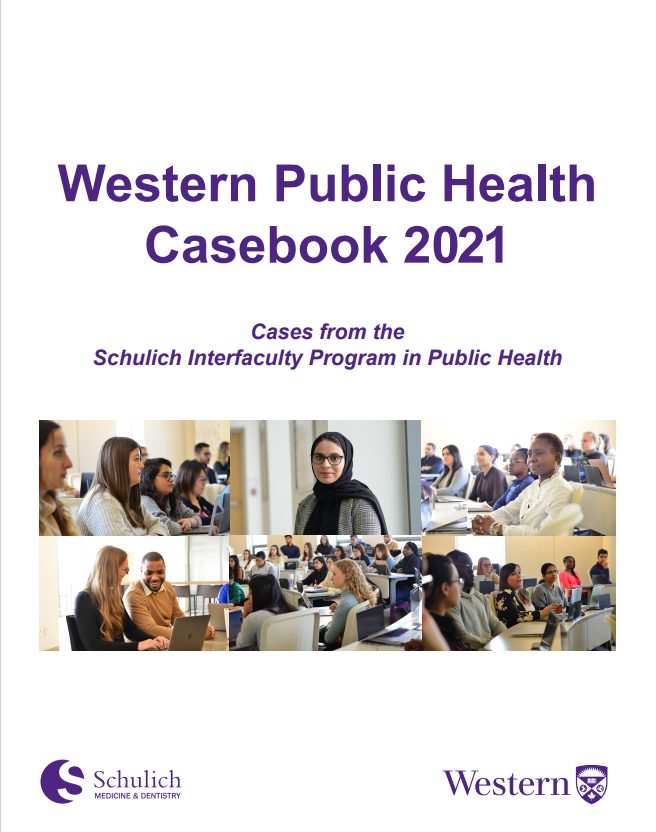
Western Public Health Casebooks (Public Health Program)
Welcome to the Western Public Health Casebooks page. Herein you will find teaching cases authored by students, faculty members, and community partners, as well as summaries of the Integrative Workshops that were held over the last few years. Our goal is to create a searchable database of freely available public health cases, for use by any program across the world.
We welcome feedback and comments on these cases. To do this, please be in touch via the program’s email: publichealth@schulich.uwo.ca.
These casebooks can also be found on our site .